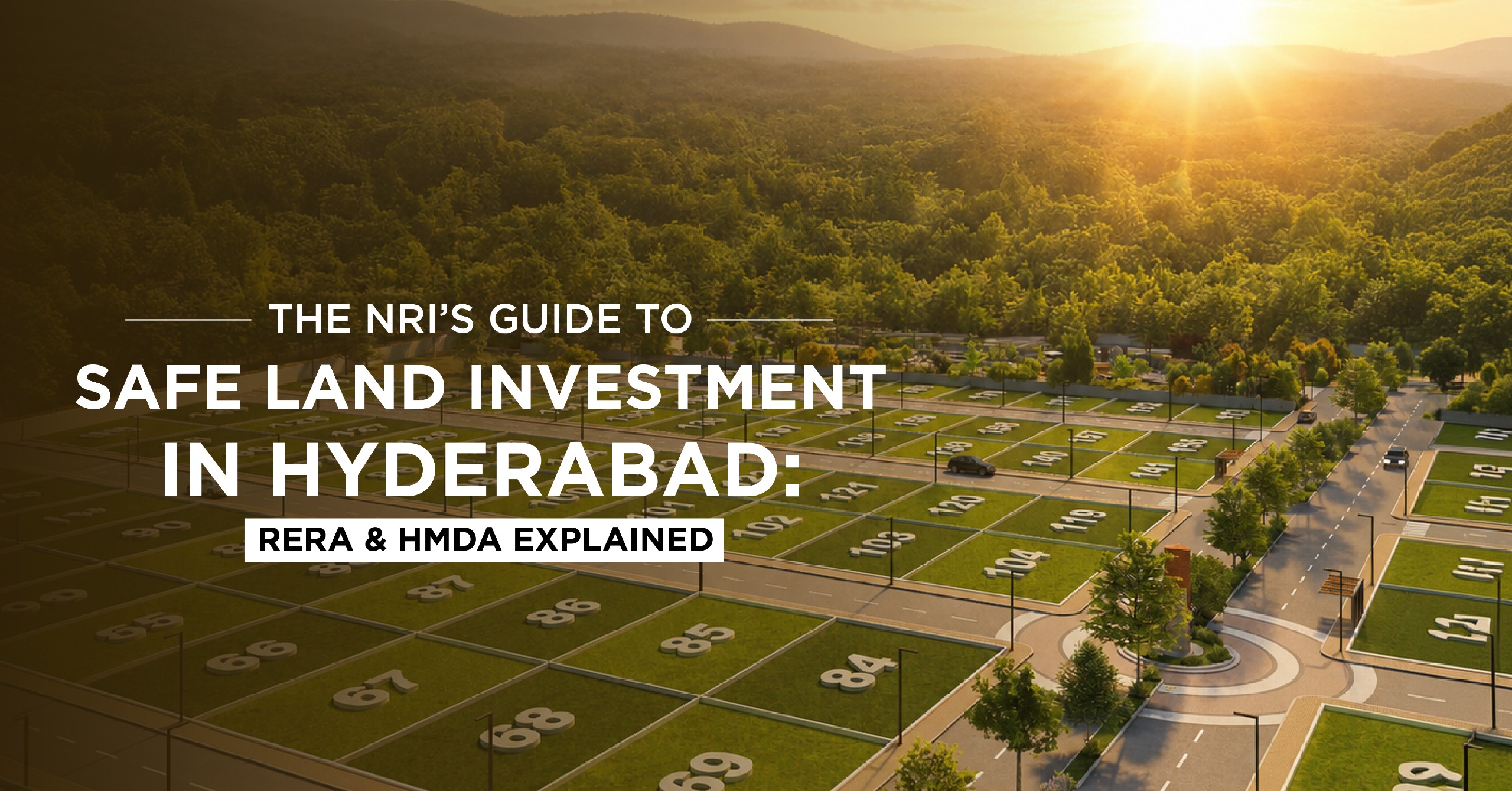
The NRI's Guide to Safe Land Investment in Hyderabad: RERA & HMDA Explained
Hyderabad offers NRIs a stable, high-growth real estate market — but investing from abroad demands legal clarity. Here's a practical guide to RERA, HMDA, NALA conversion, and the due diligence every NRI investor should complete before buying land.
Hyderabad has emerged as one of India's most stable and fast-growing real estate markets. Backed by strong industries like IT, pharma, and infrastructure, the city is expanding in a structured way through corridors such as the Outer Ring Road (ORR) and the upcoming Regional Ring Road (RRR). For NRIs, this creates a valuable opportunity to invest in land that offers long-term growth while maintaining a connection to India.
However, investing from abroad requires more than just choosing a location. Understanding approvals, legal rules, and developer credibility is essential to avoid costly mistakes.
Why Hyderabad Is a Strong Investment Destination
The city's growth is not random. It is driven by employment hubs and planned infrastructure. Premium areas like Gachibowli and Kokapet offer stable appreciation, while emerging locations such as Patancheru, Shamshabad, Shadnagar and Maheshwaram are gaining attention for their future potential.
These developing corridors, especially along major highways, are becoming hotspots for plotted developments. For NRIs, this creates options across different budgets and risk levels.
Why NRIs Prefer Open Plots
Many NRIs prefer investing in land instead of apartments for practical reasons. Apartments tend to depreciate over time and require ongoing maintenance, which can be difficult to manage remotely. Land, on the other hand, is a non-depreciating asset and is easier to hold for the long term.
This is why plotted developments in approved layouts are increasingly popular. Developers like Mugdha Realty focus on HMDA, RERA and DTCP-approved plots in strategic growth corridors, offering the kind of clarity and security NRI investors look for.
The Key Legal Rule: No Agricultural Land
Before exploring any project, it's important to understand a fundamental rule: NRIs cannot purchase agricultural land in India.
Even if a project is marketed as a "farm plot" or future residential layout, if the land is still classified as agricultural, it is not legally safe. The only exception is inheritance, which comes with its own restrictions.
NALA Conversion: Making Land Legally Usable
Much of the land on Hyderabad's outskirts is still classified as agricultural in official records. To use or sell it as residential property, it must go through NALA conversion (Non-Agricultural Land Assessment).
This process changes the land's classification to make it legally suitable for residential or commercial use. However, NALA conversion only addresses legal status. It does not approve layout development or infrastructure.
HMDA Approval: The Foundation of a Safe Investment
HMDA approval is one of the most important checks when buying land. It ensures that the layout is properly planned, with infrastructure like roads, drainage, and open spaces, and that it aligns with the city's master development plan.
For investors, this reduces legal risks, improves resale value, and makes financing easier. Reputed developers such as Mugdha Realty emphasize HMDA-approved layouts and clear title documentation, which are critical for building trust and ensuring a secure investment.
Always verify the Layout Permission (LP) number independently, and avoid projects that claim approvals are "in process."
RERA: Ensuring Developer Accountability
While HMDA focuses on planning, RERA (Real Estate Regulatory Authority) ensures transparency and accountability from developers.
A RERA-registered project requires developers to disclose approvals, follow timelines, and manage funds responsibly. One of the most important safeguards is that 70% of buyer funds must be used only for that specific project.
For NRIs managing investments remotely, RERA provides an added layer of confidence and protection.
Verifying Land Records: A Must-Do Step
Before finalizing any purchase, verifying land records is essential. Telangana's digital platforms, such as Dharani and Bhu Bharati, allow investors to check land classification, ownership details, and any legal issues.
This step helps prevent common risks like disputed ownership or transactions involving prohibited land.
Choosing the Right Developer
Even with all approvals in place, the developer plays a key role in your investment experience. A reliable developer will offer legally compliant projects, clear documentation, and locations aligned with future growth.
Developers like Mugdha Realty focus on strategically located plotted developments and customer-centric planning, which are important factors for long-term value.
Final Checklist for NRI Investors
To keep things simple, every NRI investor should ensure:
- The land is non-agricultural
- NALA conversion is completed
- HMDA approval is verified
- RERA registration is confirmed
- Land records are validated
Final Thoughts
Hyderabad's real estate market offers strong long-term potential, especially in plotted developments. But the difference between a good investment and a risky one lies in due diligence.
By focusing on legal clarity, verified approvals, and reliable developers, NRIs can turn land investment into a secure and rewarding financial decision rather than a speculative risk.
Plotted Layout vs. Smart Township: What Actually Makes a Gated Community "Future-Ready"?

How AI Data Centres Are Changing Hyderabad's Real Estate Map